Work
HARMONY
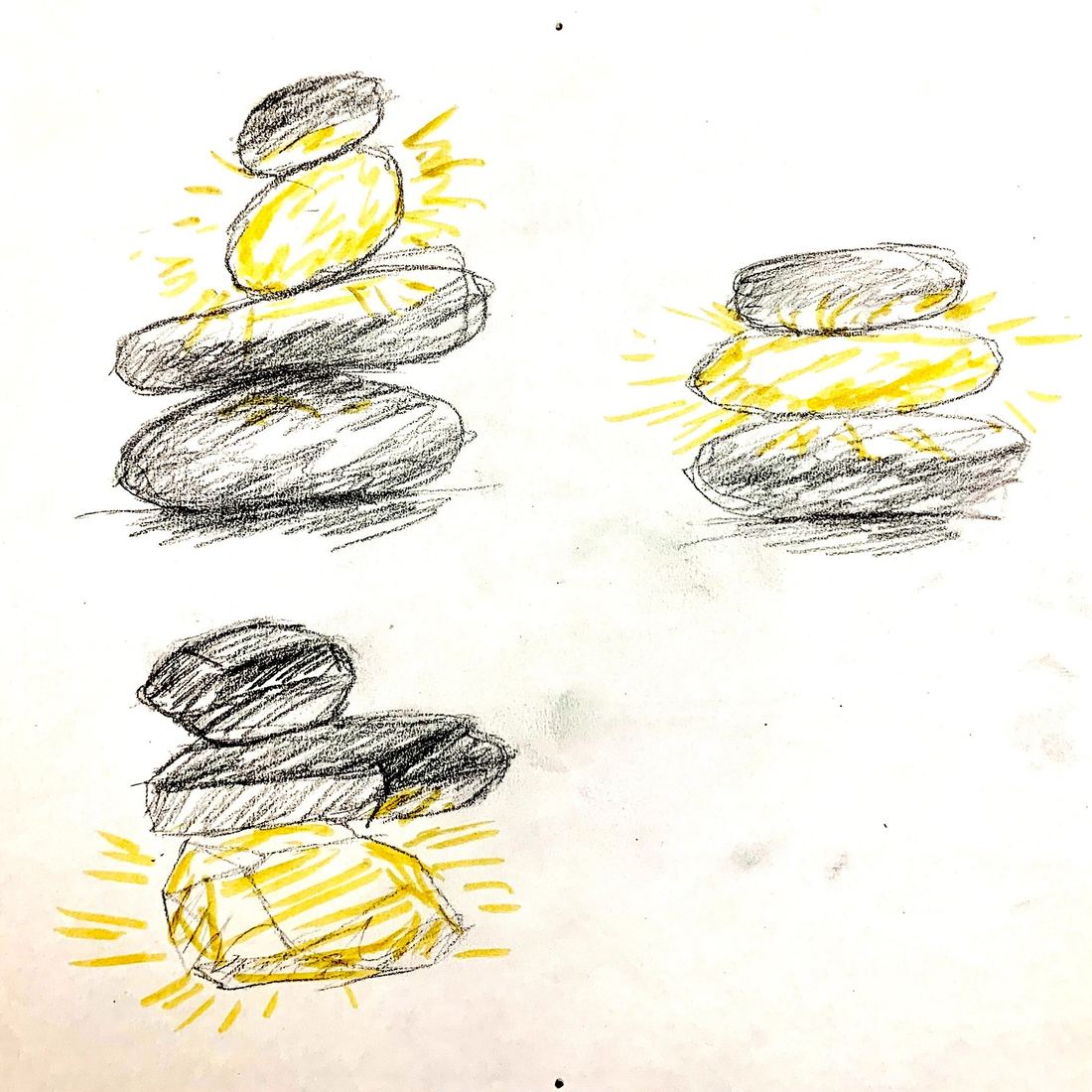
THE MEDITATION LAMP
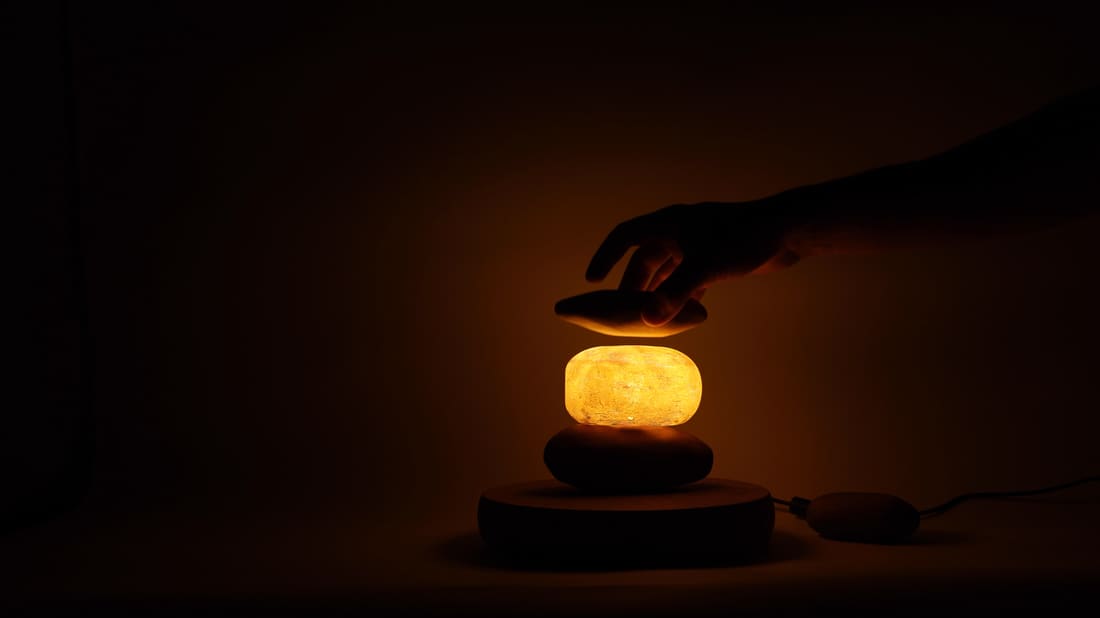
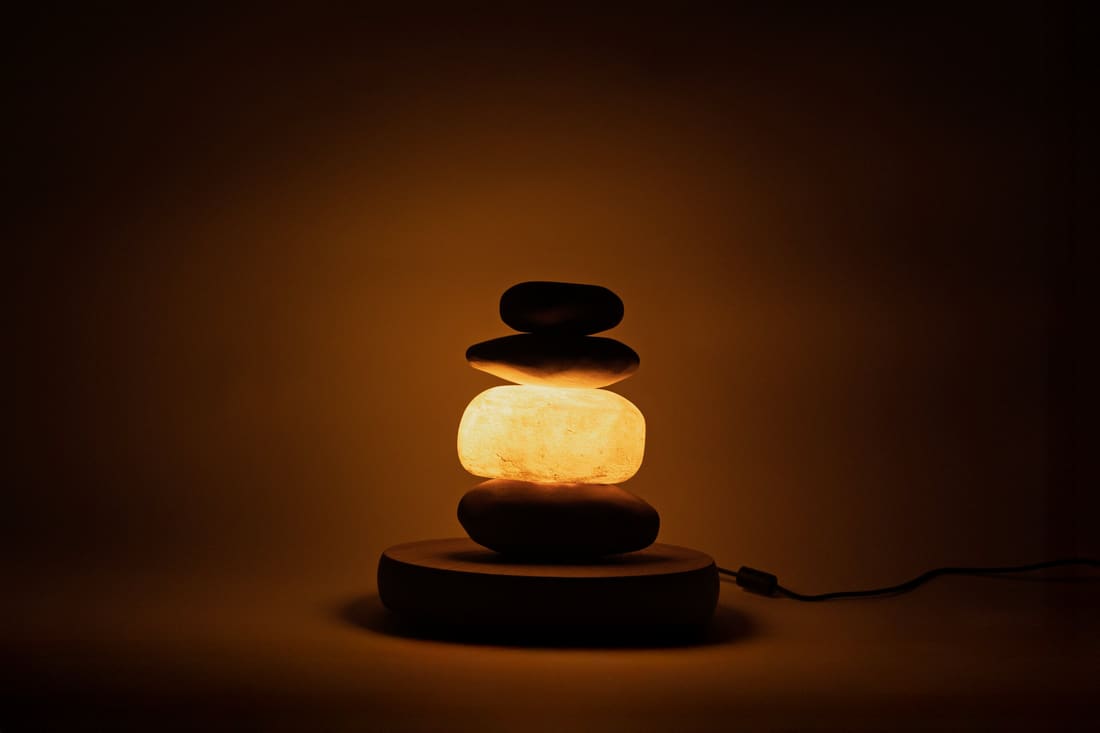
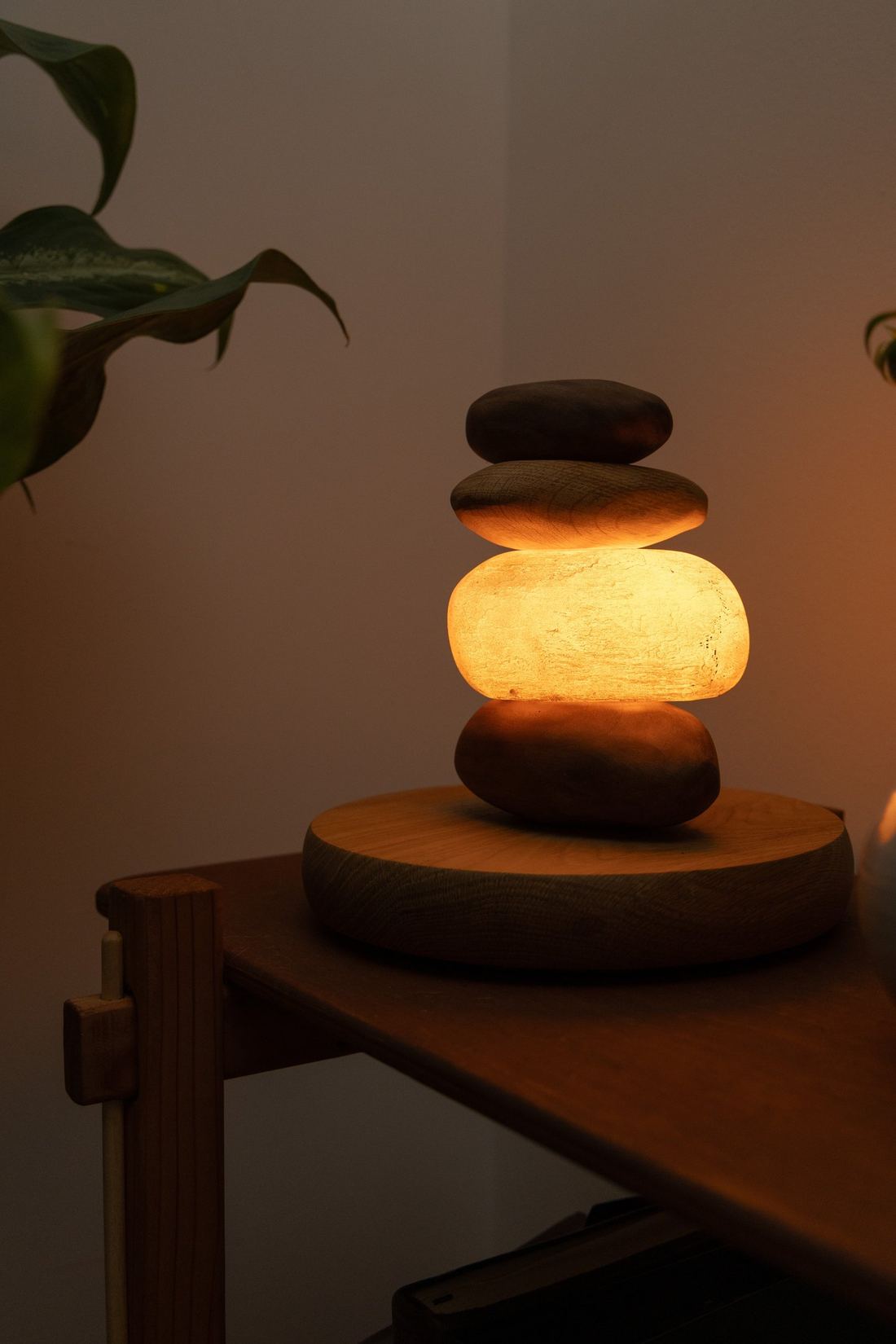
Harmony takes the wonder of wireless electricity and pairs it with the meditative art of stone stacking to create a whole new way of interacting with light.
To access the light and change the brightness, you must slow down, and balance the stones on one another. This act forces the user to detach from stress, relax, and focus on bringing balance into their life.
WHY STONE STACKING?
- Connection with Nature: Practiced in natural settings, stone stacking promotes relaxation and well-being by immersing you in calming environments.
- Mindfulness: The careful placement of each stone encourages present-moment awareness and mental clarity.
- Focus and Concentration: Requiring precision and balance, the practice helps clear the mind and enhance concentration, similar to meditation.
EXPLORATION IN BIRCH
AN EXPLORATION IN BIRCH
THE GOAL
Growing up in Colorado and now living in New York, I have become fascinated with relationship between the wild and the industrial. As the human population grows and wild spaces become less abundant, we are going to have to learn to coexist with nature in a much healthier way. This project aims to show how the organic and the refined can not only exist together, but form a beautiful, harmonious partnership.
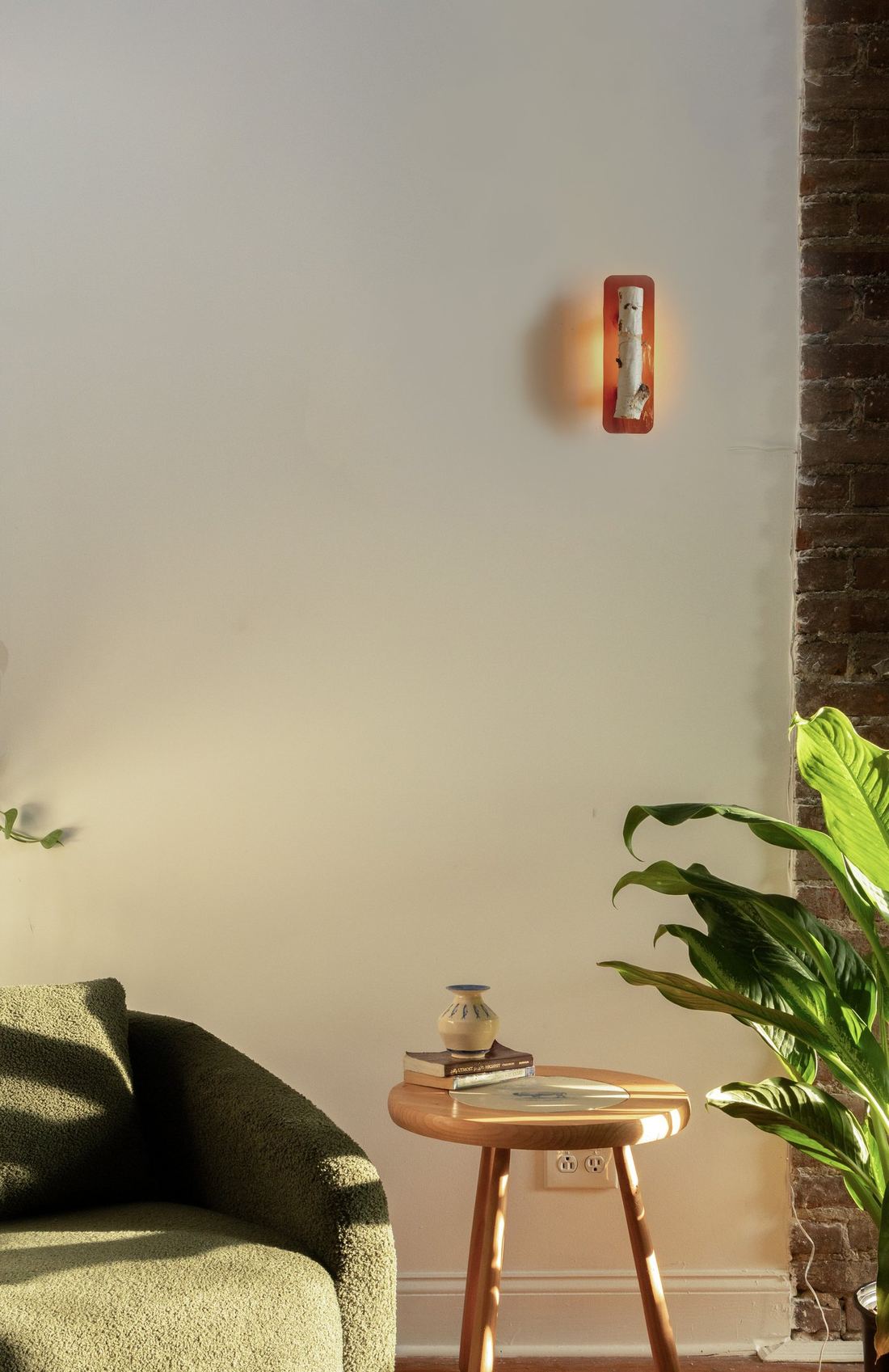
THE SCONCE
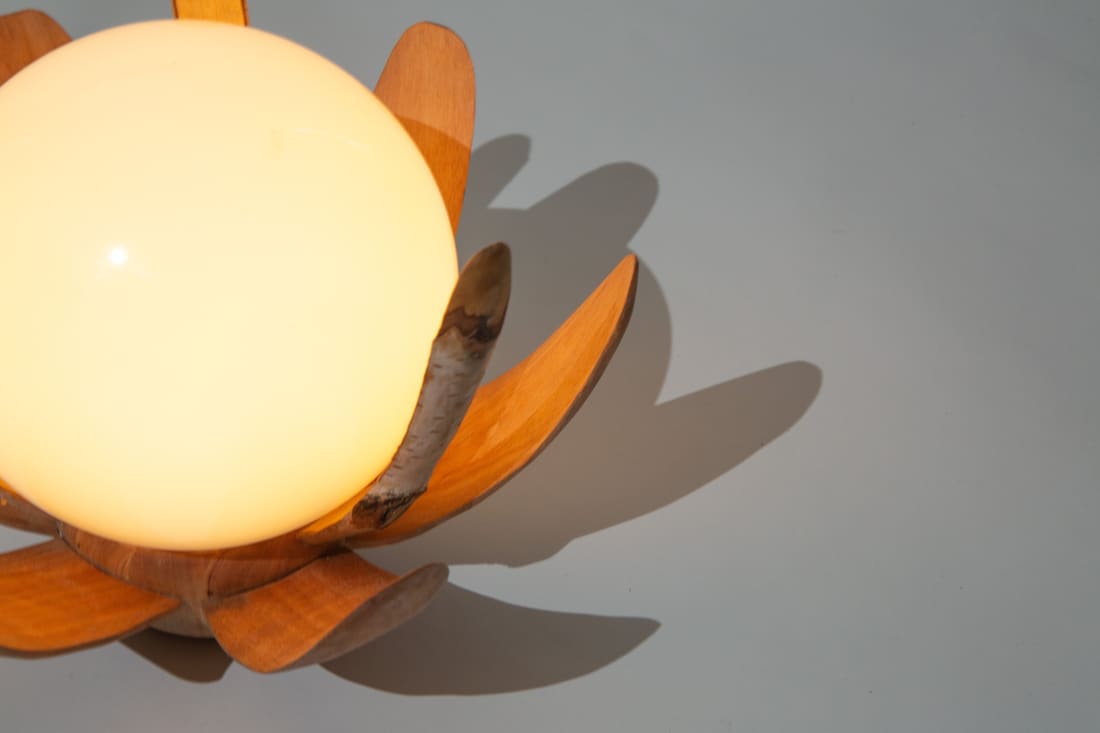
The sconce seeks to showcase the relationship between birch and glass, with light being the thread that weaves the two together
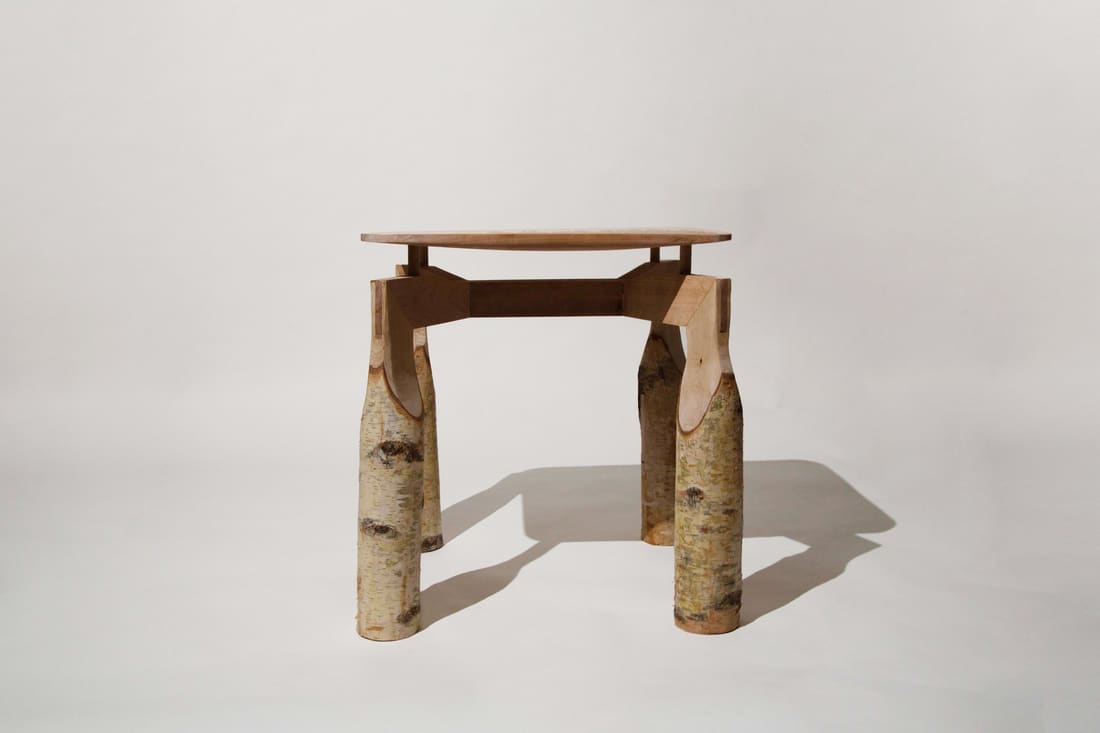
THE TABLE
This side table shows the journey of a tree becoming a table and begs the question: which is more beautiful, the untouched or the refined?
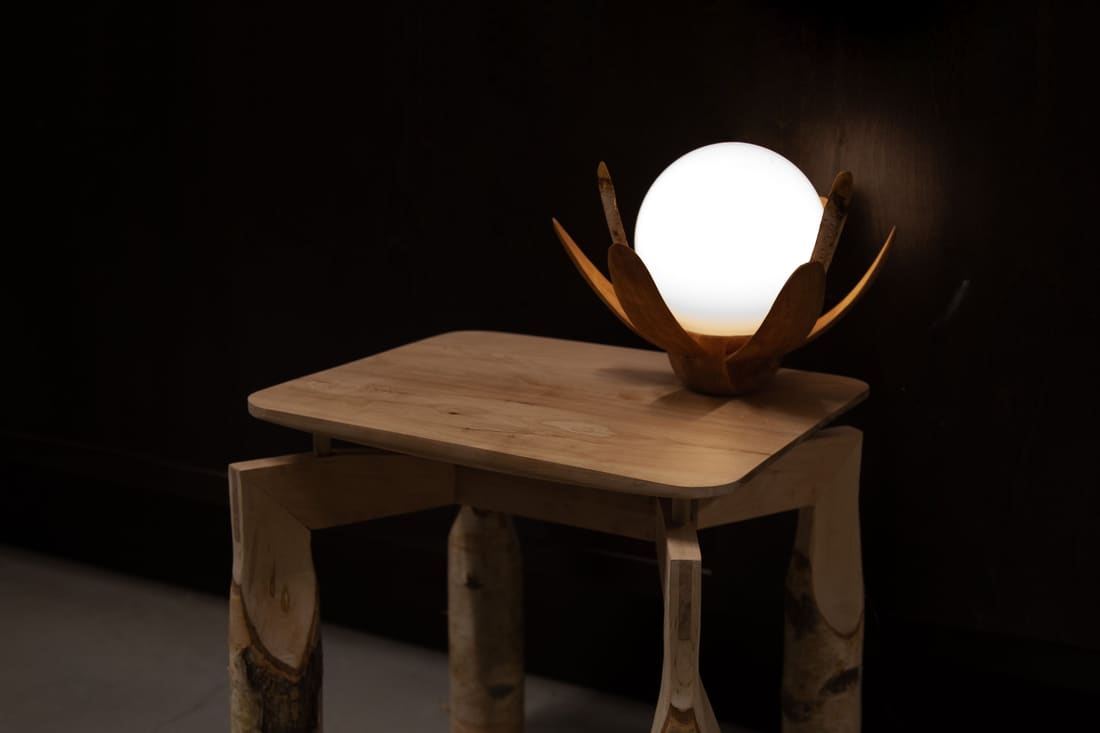
THE LAMP
The Lamp is an act of negotiation. I once heard that a great designer is, above all, a great negotiator. You have your intentions, and the material has its own. My role as a designer is to find the balance between the two. In this piece, I pushed the material beyond its usual limits by steam-bending it with the bark still intact. Bending wood is negotiation at its finest—listening closely, applying just enough pressure, and knowing when to stop before it breaks.

nogu
THE GUILT FREE LAMP
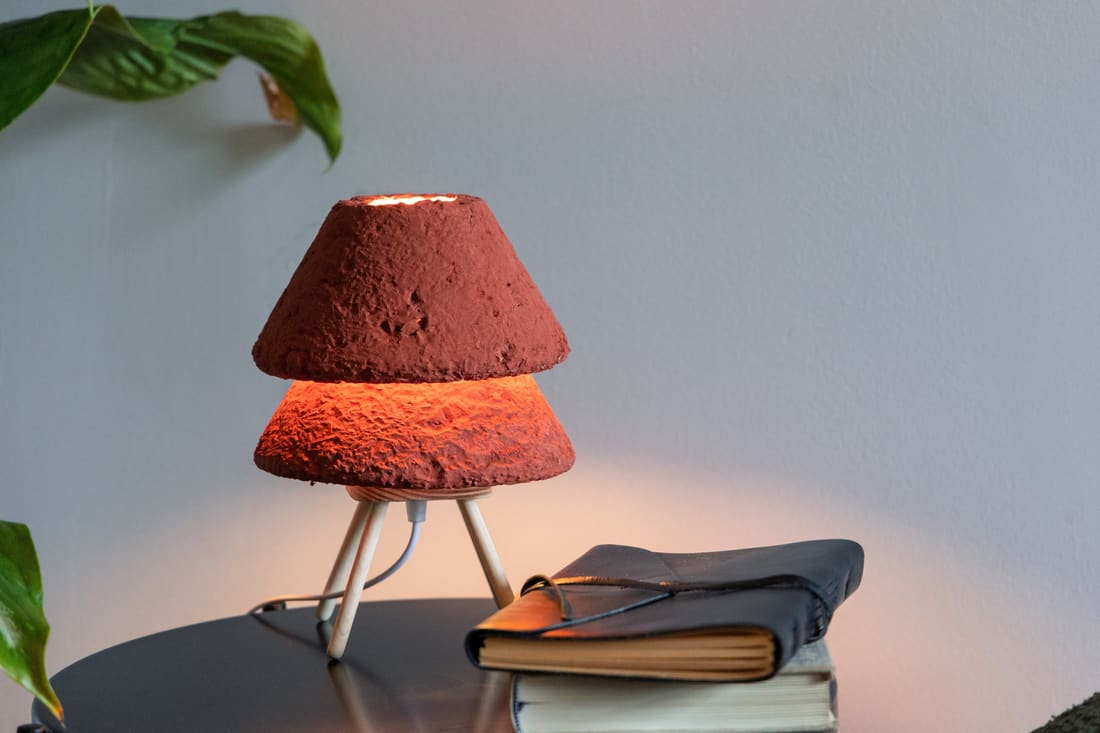
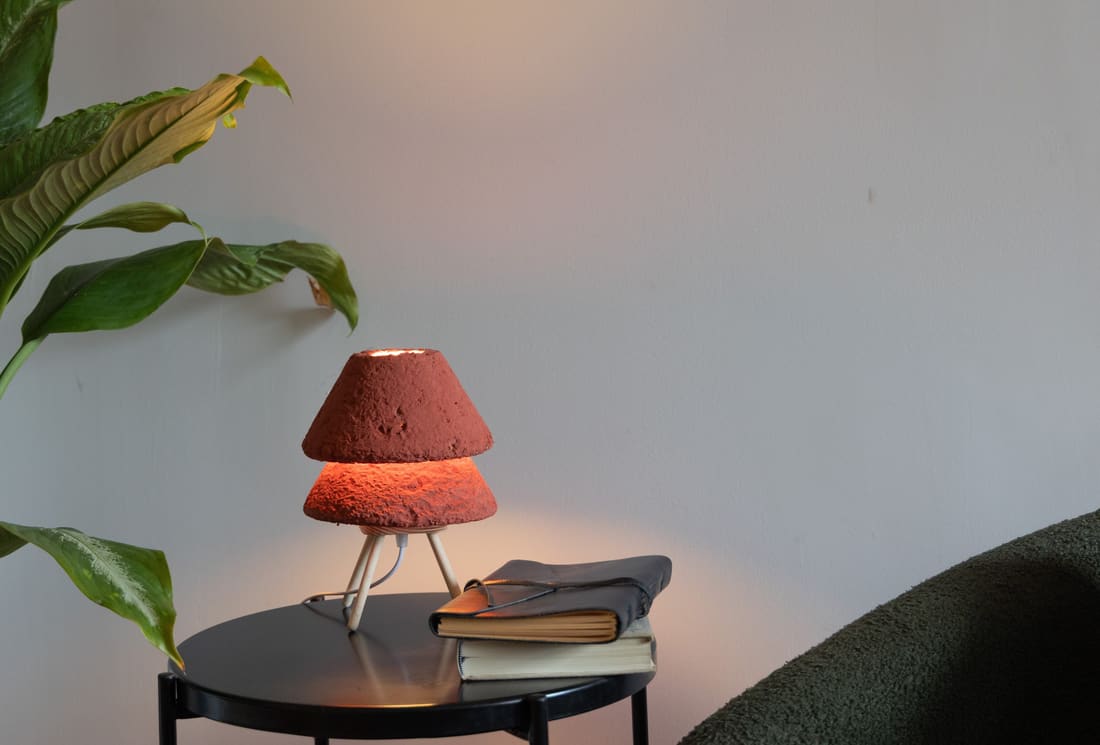
nogu (short for no guilt) is a lamp made from mycelium with the goal of providing a truly sustainable product at an affordable price to bring this amazing material to a broader audience
GOALS
- Bring mycelium to a broader, everyday audience
- Create a lamp that is affordable, compostable, and handsome
- Prioritize the end price point without compromising beauty or sustainability
GUIDING QUESTIONS
- Is manufacturing sustainably at a medium or large scale possible?
- Can products actually help the environment rather than harm it?
MAYA
One of my goals was to make mycelium more visually appealing to a broader audience, despite its naturally unpredictable and unusual textures.
I drew on the MAYA principle, Most Advanced Yet Acceptable, a design theory by Raymond Loewy that suggests people are more likely to embrace innovation when it’s presented in a familiar way.
By using a simple, recognizable form and finishing it with milk paint to soften the texture, I aimed to highlight the beauty of the material while keeping the overall design approachable.
SKETCHES
For the form, I was inspired by the various shapes of wild mushrooms
MAKING THE LAMP
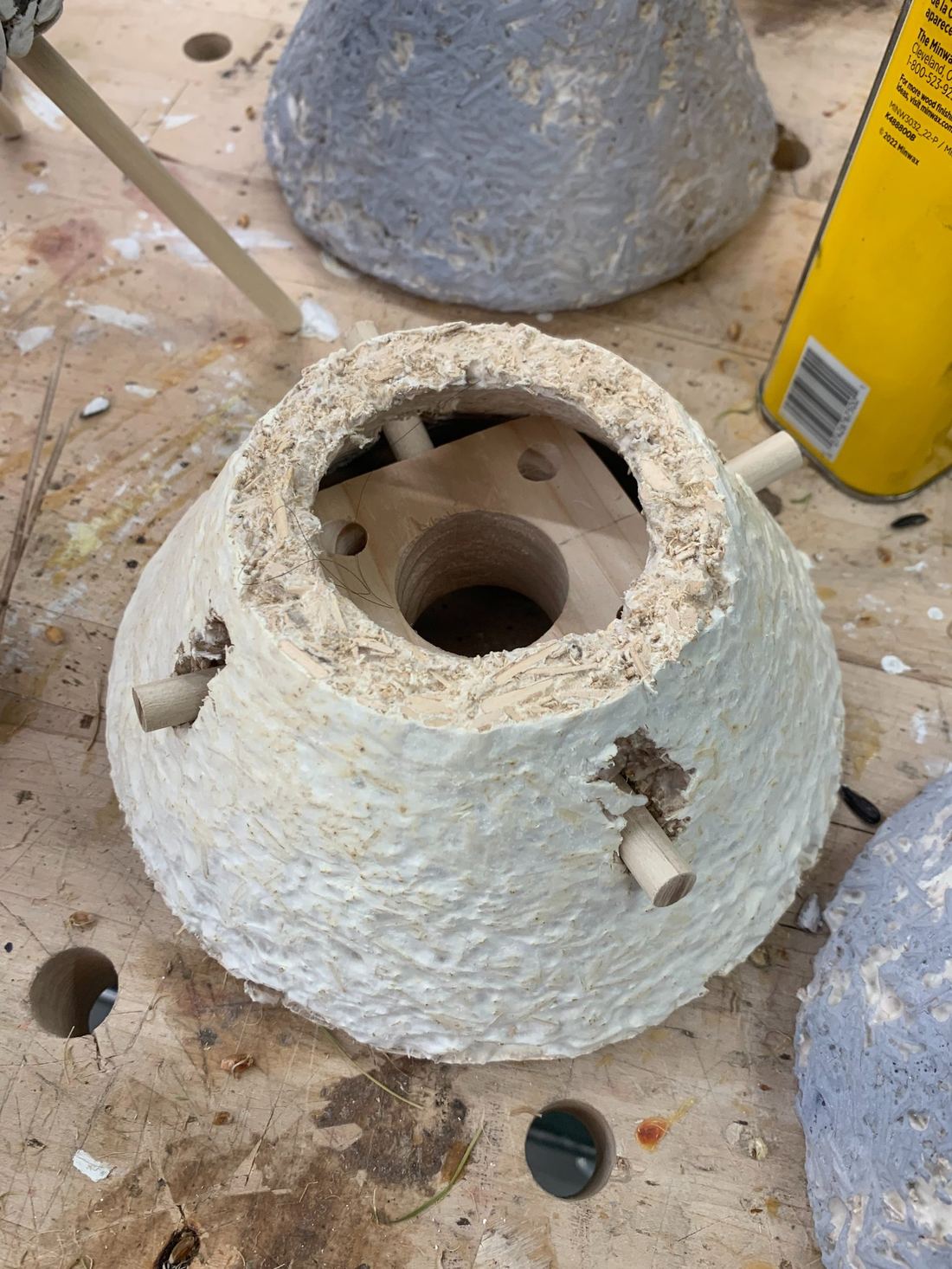
The first issue I faced in making the nogu lamp was finding a way to suspend the top shade above the lower shade
My first idea was to drill through the mycelium and have the dowels connect the the base
This created ugly holes and made the assembly quite difficult
After this, I tried adding the dowels in the mold with the mycelium so the mycelium acts as a natural glue
This worked very well and created a strong bond between the dowels and the mycelium
MAKING THE BASE
The base is made without any glues or hardware. The large part of the base is made from 2x4 scraps and the light bulb is easily removable and replaceable, making it safe for disposal
ADDITIONAL EXPLORATIONS
For this project, I also wanted to explore other materials that the nogu lamp could be made from
THE GOAL Create biomaterials that have positive externalities
WHEATGRASS ROOTS · Material 1
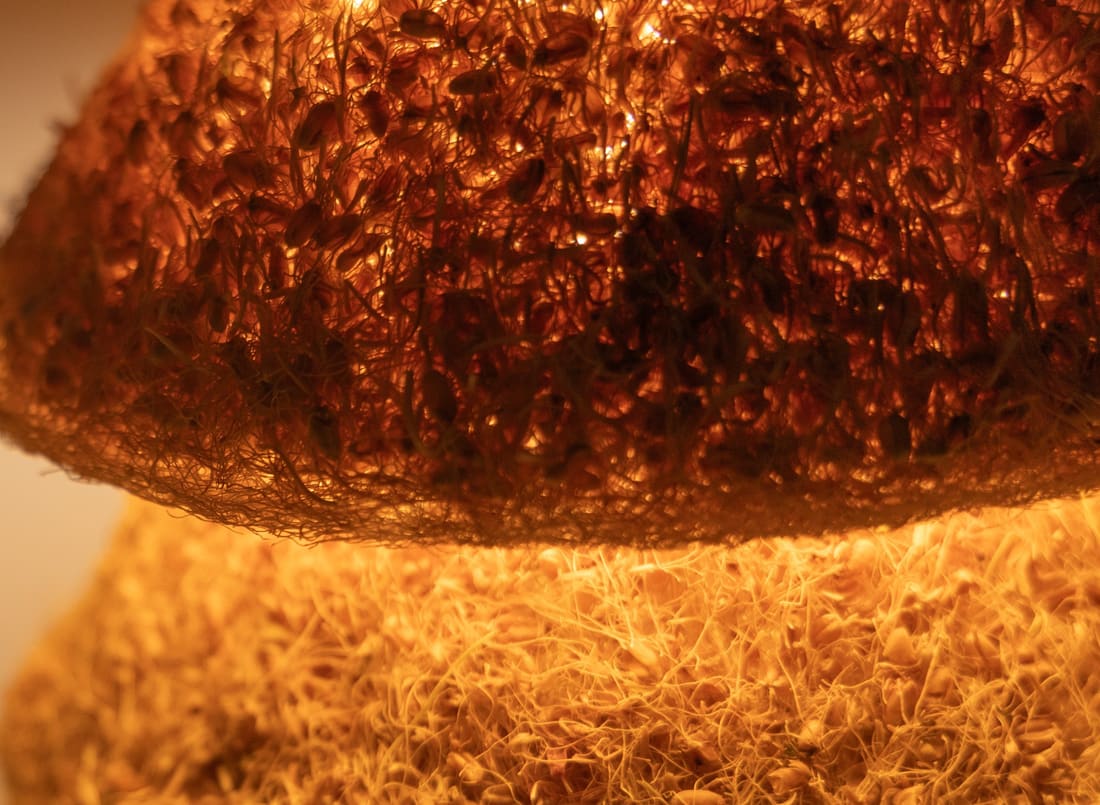
The wheatgrass seeds are sprouted in a bowl of water and then placed in a mold and watered twice a day
After the grass has grown out, it is cut and put into smoothies. The roots are dried out and used as the lamp shade
By using wheatgrass, there are three positive outcomes in manufacturing:
- The grass cleans the air as it grows
- Edible wheatgrass is grown
- A fully compostable lampshade is produced
SUNFLOWER SEEDS · Material 2
The sunflower seeds are bound together using a glelatin based bioplastic. By not altering the seeds, they still fully function as bird seed or plantable seeds. In this way, the material is simply being "borrowed" rather than consumed—temporarily shaping it into a lamp shade instead of forever changing it.

RONI
THE TOY FOR THE FUTURE
Create an open ended, biodegradable toy that is tough enough for daily wear and tear but also quickly compostable for pre-k age children (4-5)
THE PROBLEM
1.5 billionpounds of toys are thrown away each year (That's the equivalent of 5,000 747 airplanes)
90%of toys are made from plastic
THE SOLUTION: MYCELIUM
Mycelium is the root-like structure of fungi, which form an elaborate network that binds material together
DESIGN OBJECTIVE
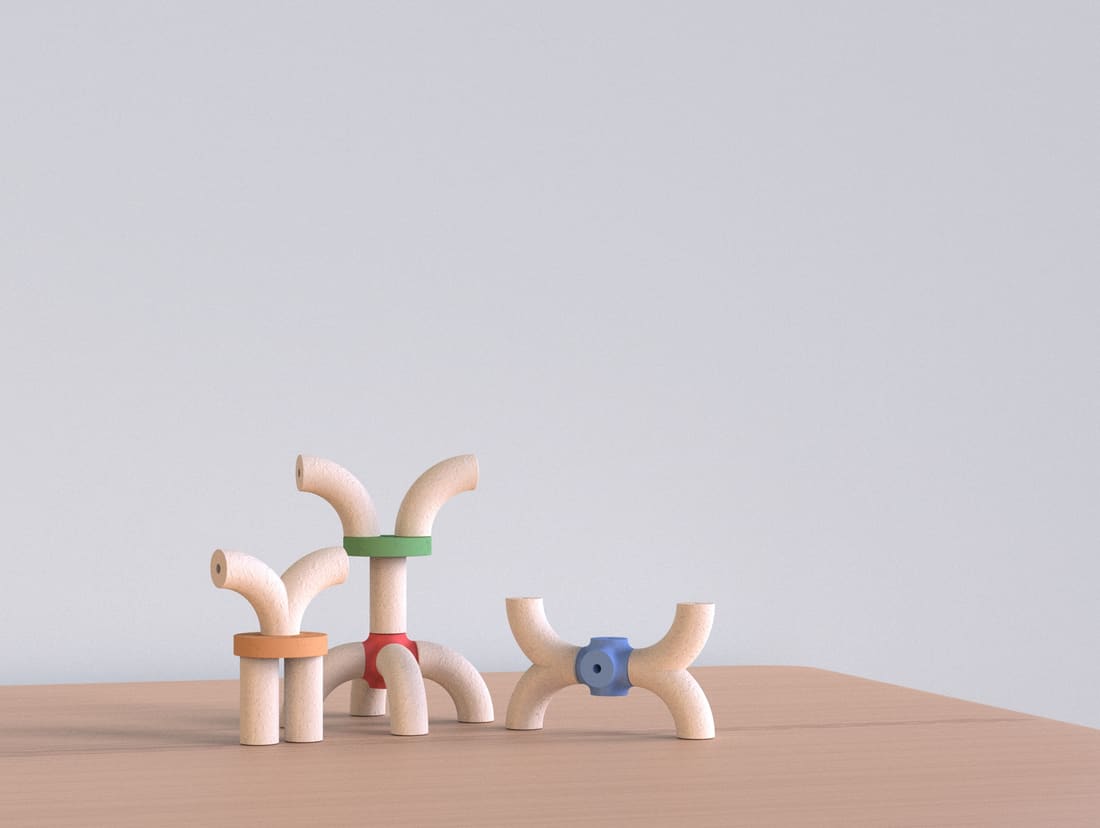
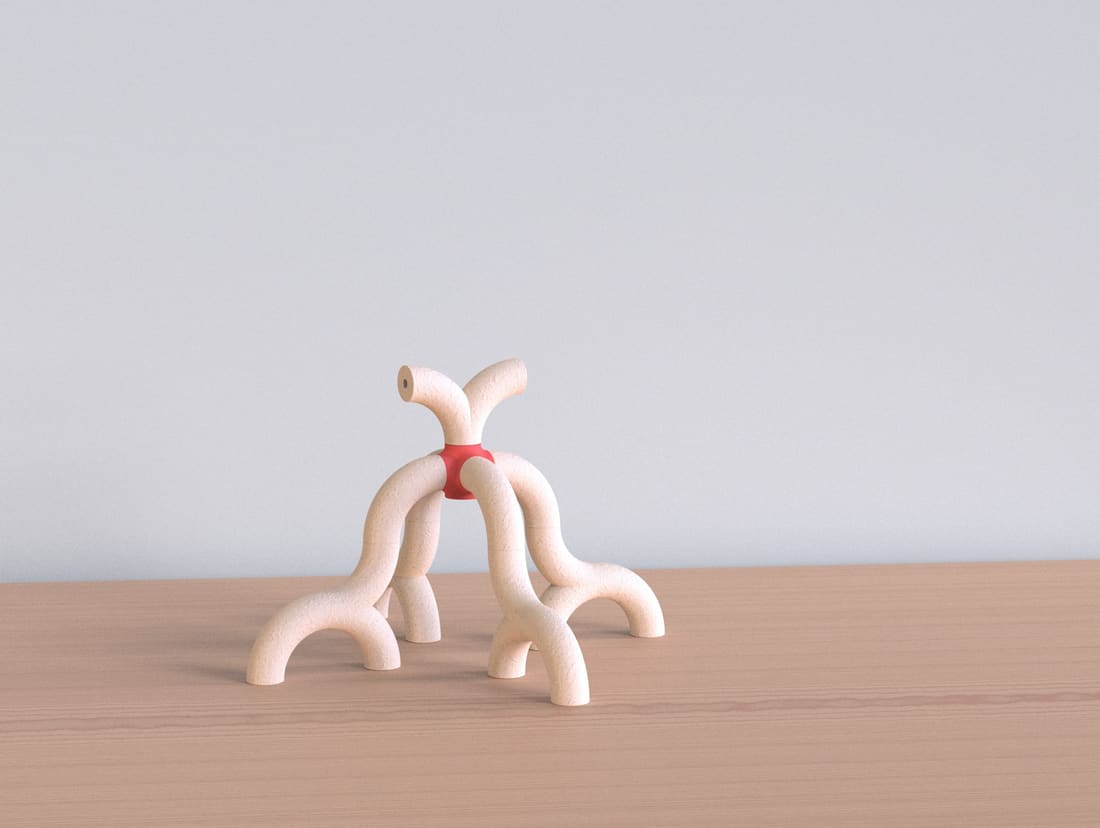
For the sketches, I wanted to ideate around the idea of open-ended play. To create a system that could be played with in a multitude of ways
CHALLENGES
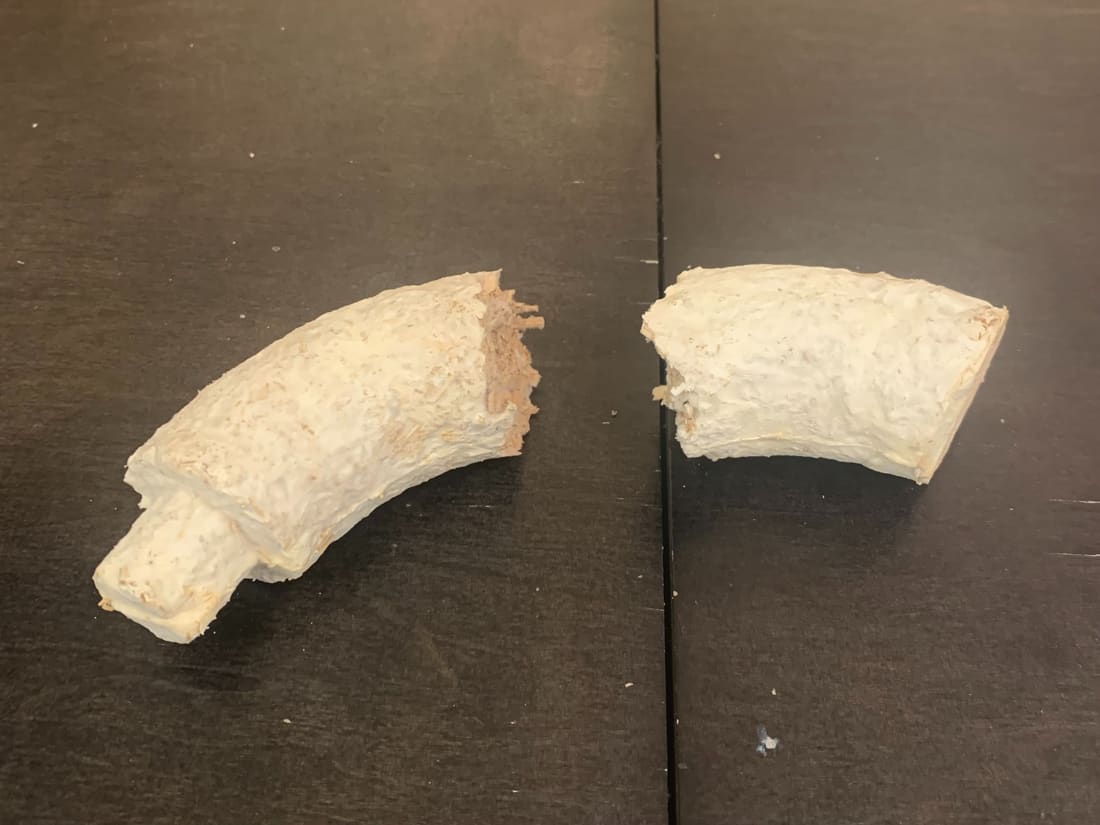
- Growing conditions not suitable for mycelium
- Substrate was too dense which caused the mycelium to not grow throughout
- Switched to wooden dowels because the mechanical connection was too inconsistent
- I added wooden connector blocks for more open-ended play
USER TESTING
My nephew building a robot with a control panel, complete with a robot voice
TAKEAWAYS:
- Wood dowels fit too loosely in the mycelium and too tightly in the wood connector blocks
- The mycelium pieces were used in fun, innovative ways
- He asked if I could make the mycelium pieces colorful like the wooden ones
moodie
CONNECTION TO LONG DISTANCE FRIENDS
THE PROBLEM: loneliness
61%of young adults aged 18–25 report frequent or intense feelings of loneliness
Harvard magazine reports that the heightened risk of mortality from loneliness equals that of smoking 15 cigarettes a day
3xFeelings of loneliness can increase rates of depression, anxiety, and stress by 3x
DESIGN OBJECTIVE
Design an object that facilitates meaningful connections between long-distance friends, fostering a sense of being known and helping with feelings of loneliness
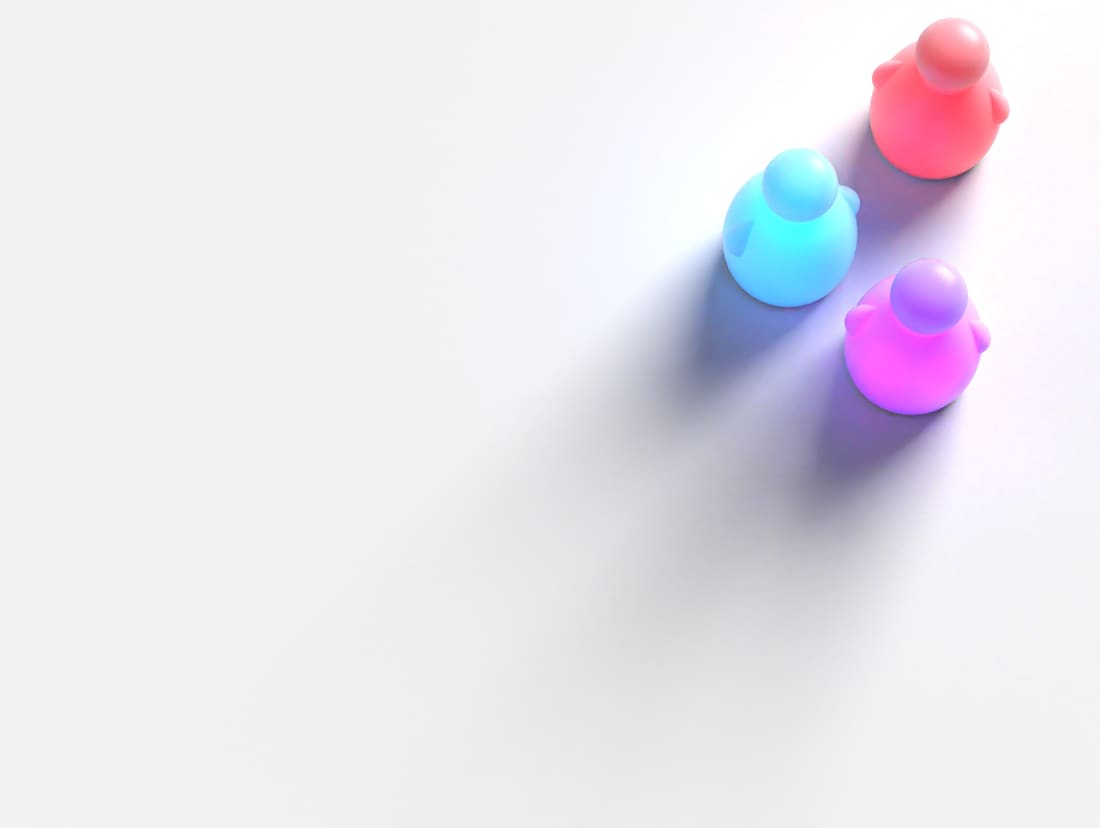
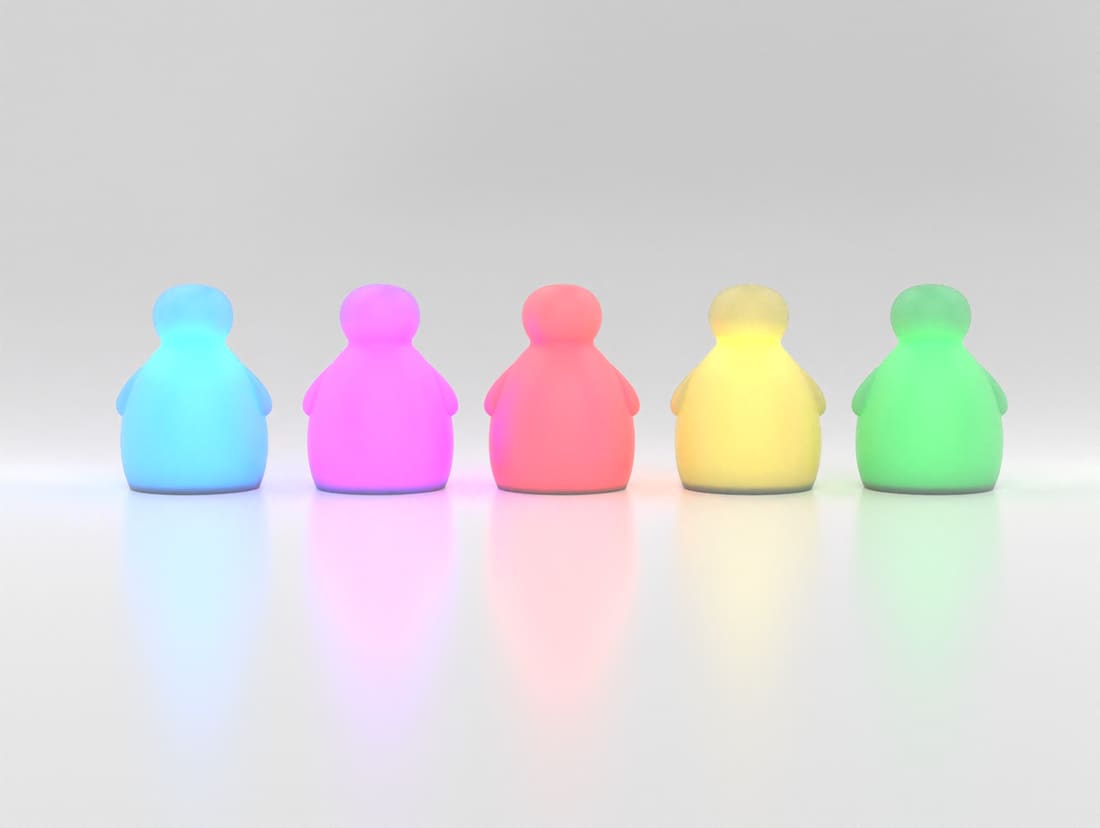
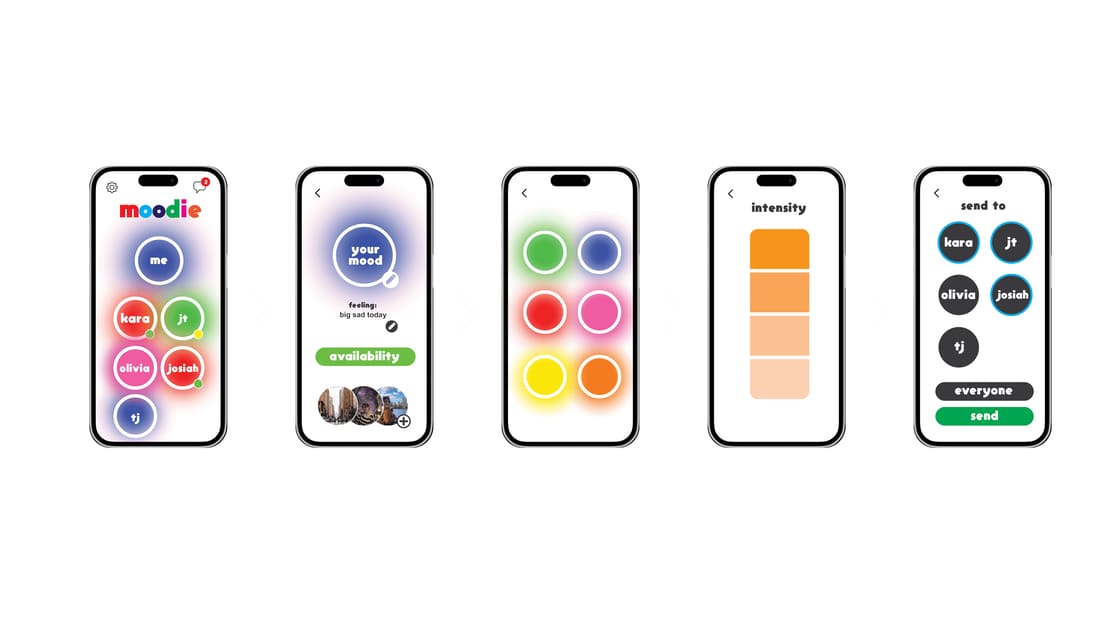
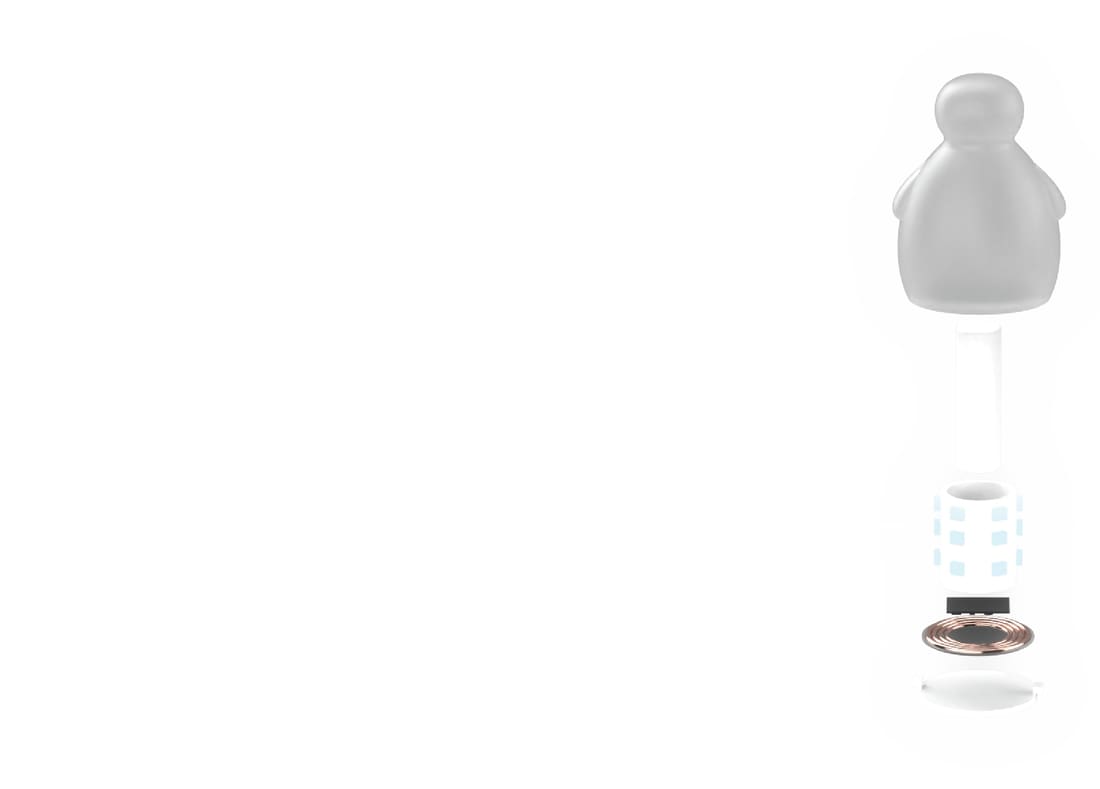
moodie is an interactive set of lights that shows you the moods and feelings of your long distance friends and family. Connected to an easy-to-use app, moodie allows you to easily share how you’re feeling and see the moods of others so you can feel more known by the people you care most about.
APP INTERFACE
goal: update your mood
feature: thinking of you
The moodie app allows users to send a “thinking of you” notification to other users which will appear on their moodie light as a pulsating, pale blue light
MIND YOUR BEESWAX
exploring beeswax as an alternative to plastic
What if materials weren’t something we owned—but something we borrowed?
As we have seen with microplastics and ocean pollution:
EVERYTHING RETURNS
If we want it to or not
It is up to designers to decide the state in which those things return
When you return something, you do so as good or better than when you found it
SO WHY BEESWAX? BORROWABILITY
It is one of the only materials in the world that is both fully recyclable and fully compostable
Meaning it can be:
HARVESTED → SHAPED → USED → MELTED → SHAPED → USED → COMPOSTED
All without changing anything about it
Just borrowing it
IT ALL STARTED WITH 3D PRINTING
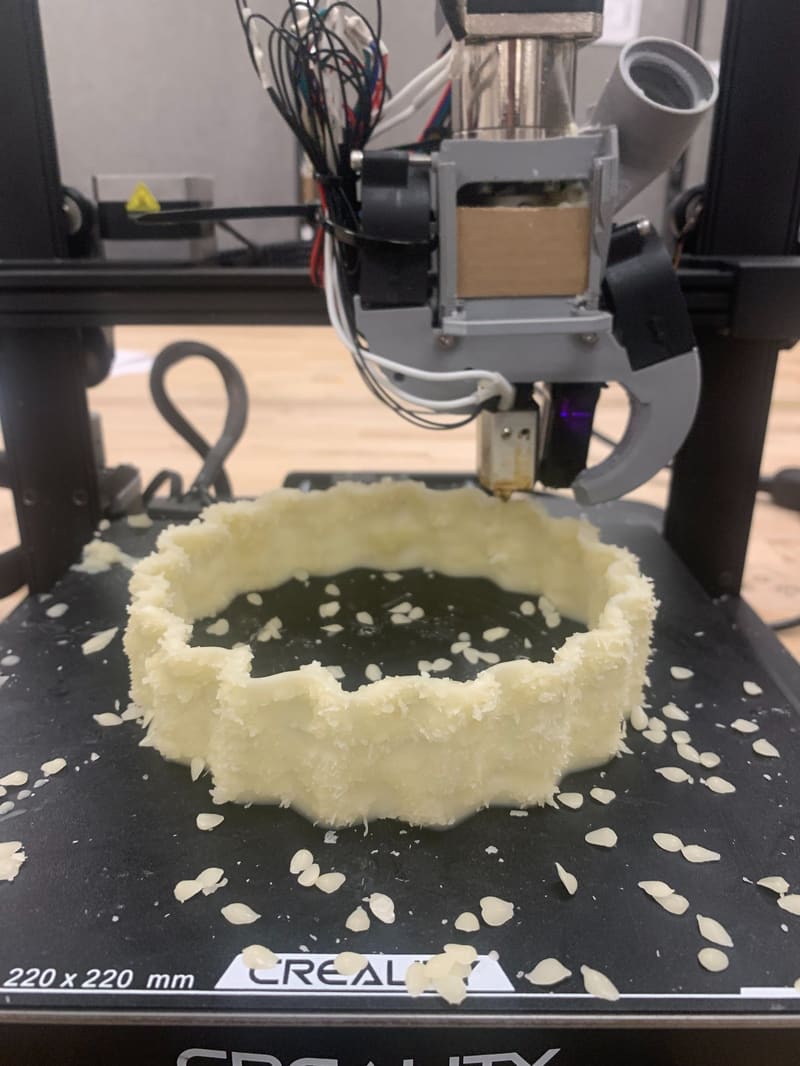
Driven by frustration over 3D printing waste, I sought a bio-based material that could be instantly remelted and reprinted on-site. This led me to pioneer experiments using beeswax as a sustainable, zero-waste filament alternative
I began to modify a 3D printer to be able to print molten beeswax using a drip method instead of an extrusion
After finding some success with 3D printing, I began to explore other ways wax could be used in new ways
ADDITIONAL EXPLORATIONS
Here are some of my experiments which included texturing, embossing, slumping, casting with water, foaming, and threading.
From here, I picked three object typologies I believe best shows what beeswax can be used for: lighting, tabletop, and cosmetic packaging
LIGHTING
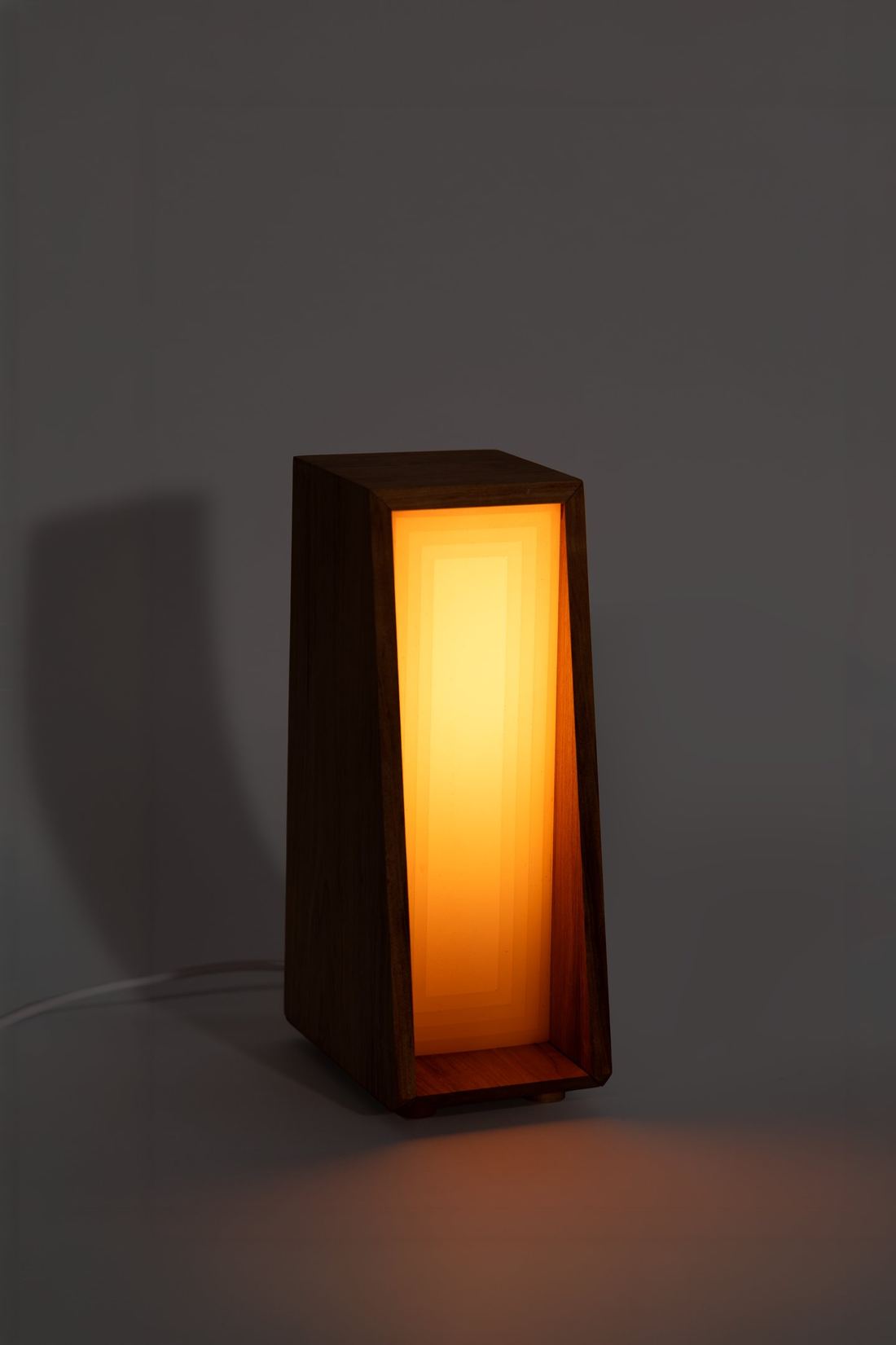
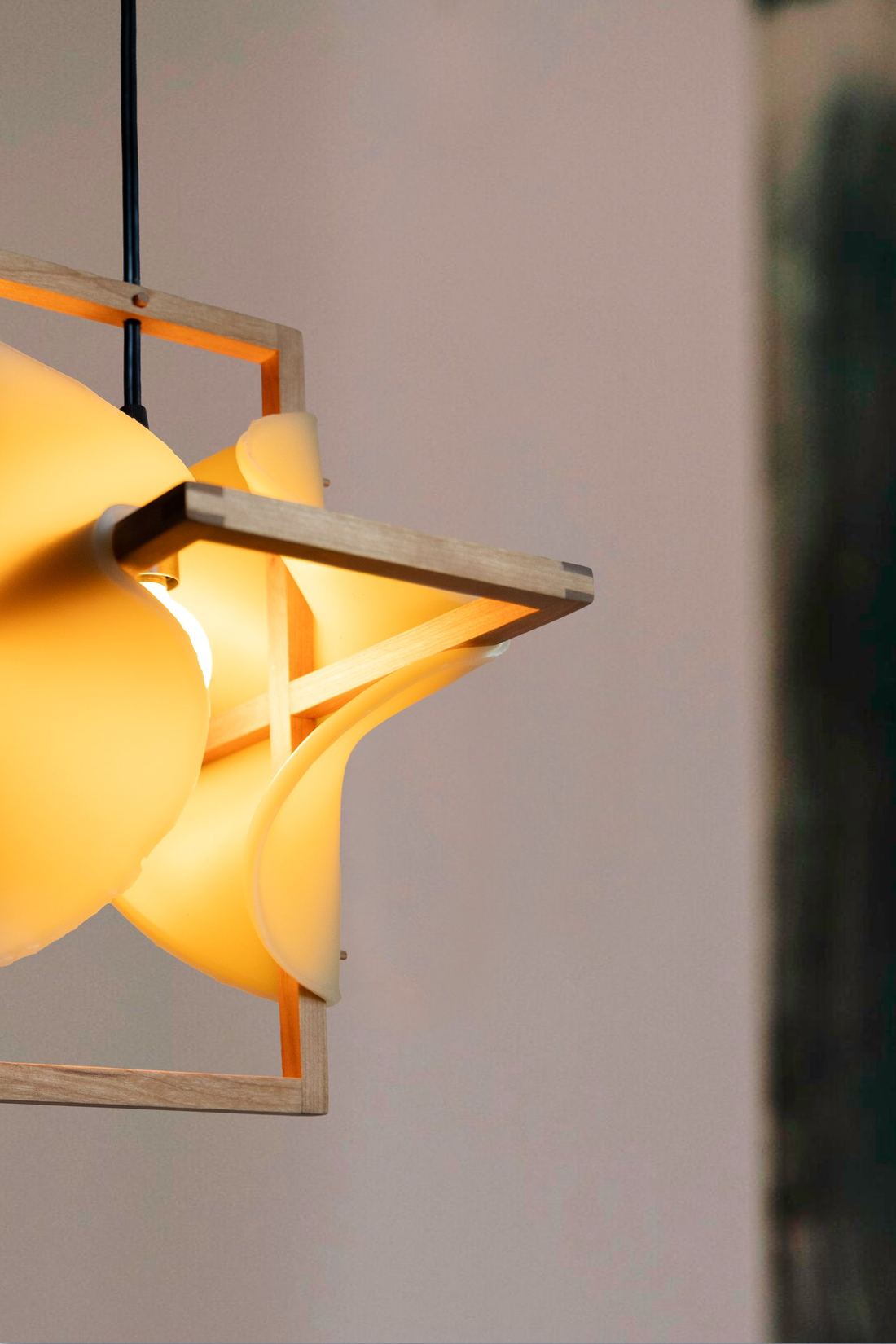
Beeswax has been used in lighting for thousands of years so I wanted to see if it could be applied to more modern contexts. With the use of LEDs and their much cooler bulbs, melting is no longer an issue compared to incandescents.
TABLETOP
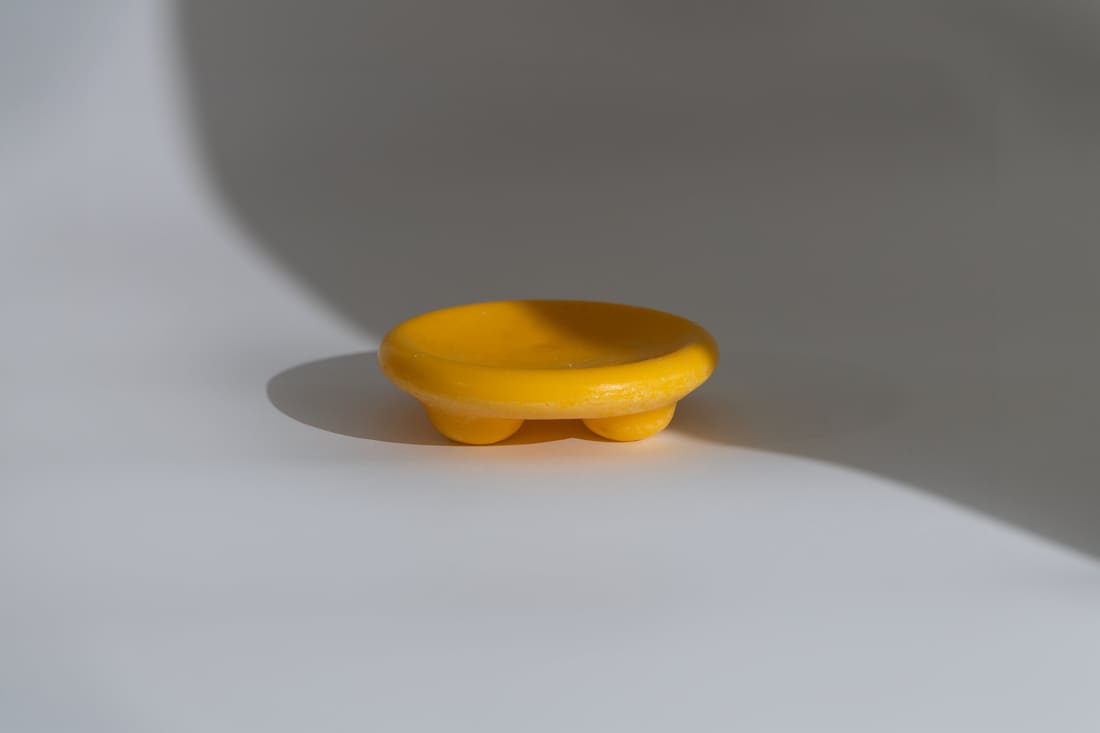
Tabletop objects became a natural direction because they are among the most personal and frequently interacted with items in our daily lives. Unlike larger, more permanent designs, they invite touch, movement, and constant rearrangement, making them ideal for a material like beeswax that responds to use and change. Instead of shedding microplastics, this object makes the skin healthier with every touch.
COSMETIC PACKAGING
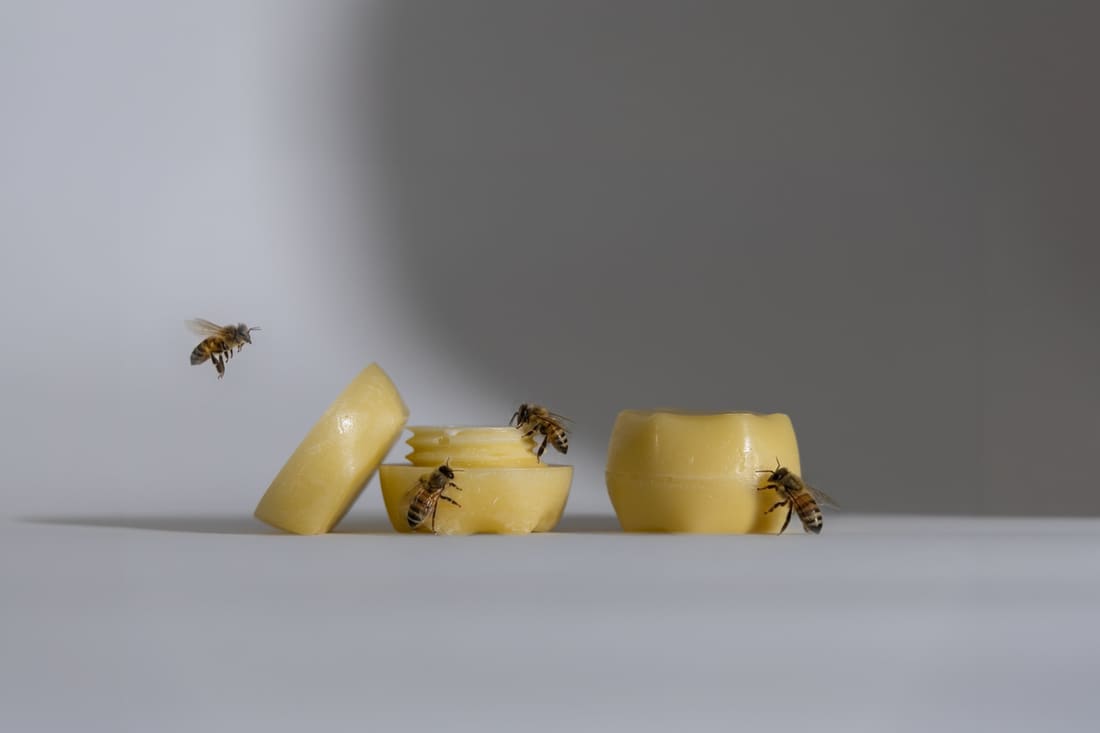
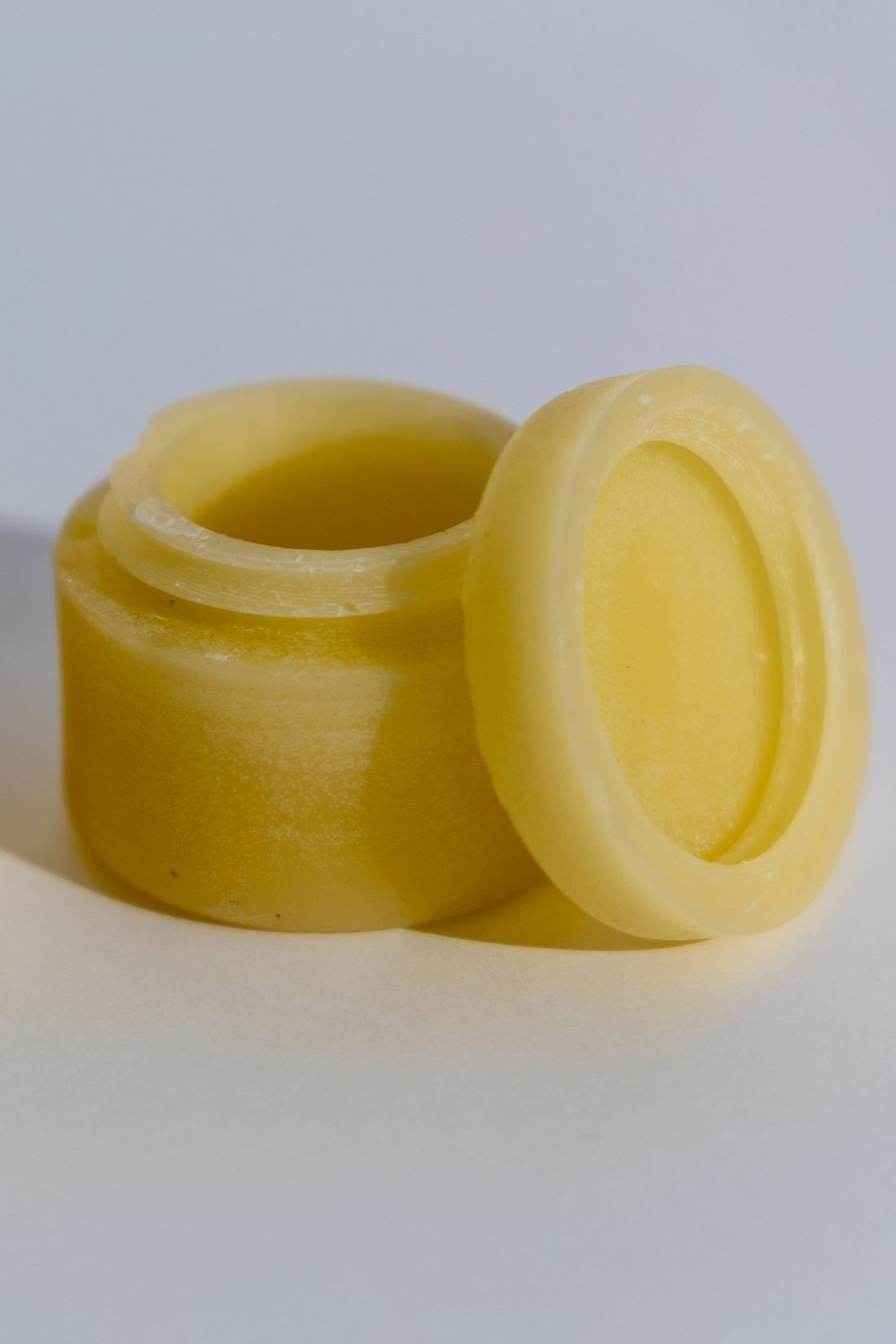
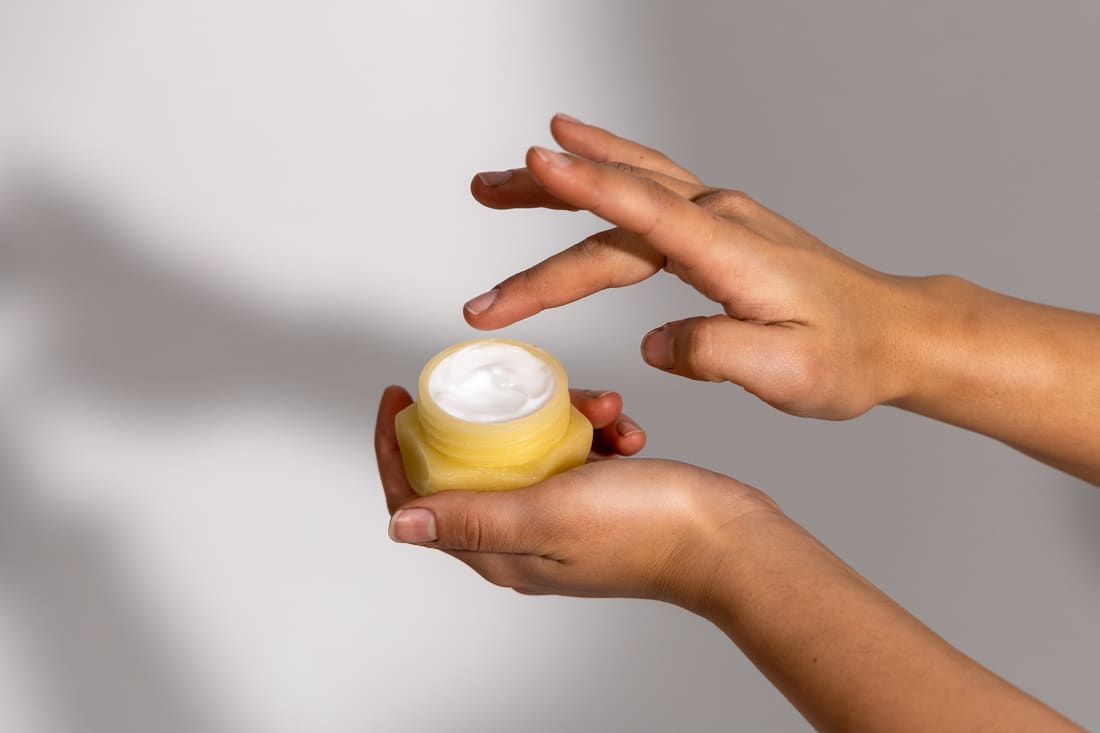
Cosmetic packaging suffers from a material mismatch: short-lived products are encased in plastic that lasts for centuries. Beeswax fixes this by aligning the packaging's lifespan with the product; it is biodegradable, renewable, and naturally antimicrobial. Furthermore, because it can be melted and reshaped, beeswax supports a circular approach by transforming packaging from disposable waste into a reusable resource.
FUN FACT
Bees don't make hexagons, they make circles. It is the heat and surface tension that makes the hexagon.
I wanted to create a form that uses both the shape of a circle and a hexagon to pay homage to the maker of the material.
REPLACING MINDSETS
More than a swap of materials, this project is a shift in perspective. We are moving away from the culture of disposal toward a philosophy of borrowing. Because every resource has an origin and a destination, borrowing isn’t a choice—it’s a reality. The real decision lies in whether we choose to sustain life or degrade it.